
Real Estate Investor Plumbing Checklist: What to Evaluate During Due Diligence

Plumbing issues are one of the most common—and most expensive—surprises investors face after closing.
Unlike cosmetic repairs, plumbing problems often stay hidden until inspections, tenant complaints, or water damage force action.
Whether you’re flipping, buying a rental, or evaluating a value-add property, this checklist helps you identify plumbing red flags before they affect your timeline, inspection, or margins.
Why Plumbing Due Diligence Matters for RE Investors
Old or failing plumbing can lead to:
Inspection failures or repair demands
Last-minute renegotiations
Delayed closings
Tenant complaints and emergency repairs
Water damage that destroys finished rehab work
Reduced buyer confidence and lower ARV
A proper plumbing evaluation isn’t about perfection—it’s about predictability.
The Investor Plumbing Due Diligence Checklist
1. Identify the Pipe Material (This Is Critical)
The type of pipe in the property tells you more than almost anything else.
Common pipe types in Houston investment properties:
Galvanized steel
Copper
CPVC
PEX
What property investors should know:
Galvanized pipes
Common in homes built before the 1970s
Corrode from the inside out
Cause low water pressure, rusty water, and leaks
Frequently flagged by inspectors
Often near the end of their usable life
Copper pipes
Durable when properly installed
Can still fail due to age, pinhole leaks, or corrosion
May need partial or full replacement depending on condition
CPVC
Used in some older renovations
Can become brittle over time
Sensitive to heat and UV exposure
PEX
Modern, flexible, and corrosion-resistant
Often the preferred replacement option for investors
Tip:
If you see galvanized anywhere in the system, assume it will eventually need replacement—even if it’s not leaking yet.
2. Check Water Pressure (Low Pressure Is a Warning Sign)

Low water pressure is often a symptom, not the problem itself.
What to look for:
Weak flow at multiple fixtures
Pressure that drops when multiple fixtures run
Inconsistent pressure between hot and cold
Possible causes:
Internal corrosion in galvanized pipes
Partial blockages from mineral buildup
Undersized or failing supply lines
Investor insight:
Low pressure almost always gets worse, not better—and inspectors often note it.
3. Look for Visible Corrosion or Rust

Corrosion - Galvanized Pipe
Some plumbing problems are hiding in plain sight.
Areas to inspect:
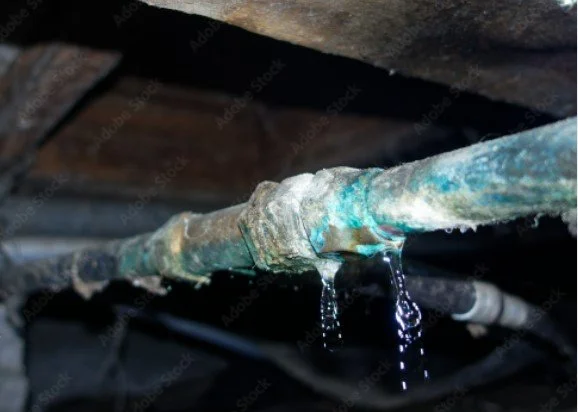
Corrosion & Leaks - Copper Pipes
Exposed pipes under sinks
Water heater connections
Laundry room plumbing
Basement or crawl space lines
Garage or exterior pipe runs
Red flags:
Flaking or pitted metal
Rust stains on pipe joints
Green corrosion on copper
White buildup or chalky residue
Tip:
Visible corrosion usually means there’s more corrosion you can’t see.
4. Determine the Age of the Plumbing System
Plumbing age matters just as much as pipe material.
General lifespan estimates:
Galvanized steel: 40–60 years
Copper: 50–70 years (sometimes less)
PEX: 40+ years (still relatively new)
How to estimate age:
Original build date of the home
Permit history
Previous renovation records
Visible transitions between pipe materials
Investor insight:
If the plumbing is original and the home is 50+ years old, replacement should be part of your financial modeling—even if it’s not leaking yet.
5. Test Water Quality and Color
Discolored water is more than a cosmetic issue.
What to watch for:
Brown or yellow water
Metallic smell
Staining in sinks or tubs
Common causes:
Rust from galvanized pipes
Internal corrosion breaking loose
Sediment buildup
Investor takeaway:
Rusty water kills buyer confidence and generates tenant complaints quickly.
6. Evaluate Past Repairs and “Patchwork” Fixes
A system with many small repairs often signals a larger problem.
Look for:
Multiple repair couplings
Mixed pipe materials
Temporary fixes
Evidence of recurring leaks
Tip:
Repeated repairs usually cost more long-term than a planned repipe—and they introduce uncertainty into your timeline.
7. Consider Inspection Risk Early
Inspectors commonly flag:
Galvanized pipes
Low water pressure
Improper transitions between pipe materials
Corrosion at water heater connections
Unsupported or improperly installed lines
Investor insight:
Even if a buyer or tenant accepts older plumbing, inspectors may not.
Plan for inspection outcomes, not best-case scenarios.
8. Factor Plumbing Into Your Investment Strategy
Different strategies require different tolerance levels.
For flippers
Inspection clarity and buyer confidence matter most
Old plumbing often becomes a negotiation point
For buy-and-hold investors
Long-term durability and tenant satisfaction matter
Emergency plumbing repairs disrupt cash flow
For out-of-state investors
Predictability and documentation are critical
When to Bring in a Repipe Professional
You should consult a repipe professional when:
The property has galvanized pipes
Multiple red flags appear on this checklist
You’re in a tight inspection or rehab timeline
You want fixed pricing and a clear scope before closing
A consultation during due diligence can prevent costly surprises later.

Real Estate Investor Takeaway
Plumbing due diligence isn’t about finding everything.
It’s about identifying risk, understanding timelines, and protecting your margins.
The earlier you evaluate plumbing, the more control you have over:
Budget
Negotiations
Rehab scheduling
Inspection outcomes
Long-term ROI
Need a Second Set of Eyes on an Investment Property?
We Do Repipes specializes in evaluating and repiping investment properties across the Houston Metroplex.
If you’re reviewing a property with aging or questionable plumbing, a consultation can help you determine:
Whether repiping is necessary
What the realistic timeline looks like
What the fixed cost would be
How it may impact inspections or closing
Schedule a Consultation
Call for an Investor Estimate
Interested in additional investor benefits and priority access?
Learn more about our Investor Network.
Download Free Plumbing Checklist: Investor Plumbing Due Diligence Checklist
